

Many people wonder if they can act as their own general contractor (or GC), manage the building of their cabin and save money on building their log home. If it's the case that you:
- have experience in construction or are comfortable dealing with the many trades and subcontractors involved in building a log cabin,
- are very well-organized,
- can take time off from work or don’t have a job.
If these are true for you, then you might consider this plan. After all, you can save as much as 20% of the overall cost of the job.
Be aware that it is a much bigger job than you think and to save time and energy you must stay ahead of the rest of the building crews and follow a plan. You will need to be able to track every detail of a very complex, evolving project.
Contract Specifications
You must be able to complete a set of contract specifications detailing every step of the construction process and listing precise, specific materials, sizes, manufacturers and colors of products to be installed.
These specifications will be used to obtain comparable and fair bids and will become a part of the final set of contract documents including the construction contract, contract specifications, draw schedule, log home package, change orders and building plans.
Contractor Duties and Responsibilities
Here are just a few of the duties and responsibilities of a contractor that are critical to a smooth log cabin build. Carefully consider if you want to act as your own general contractor and handle each of these on your own:
- Scheduling deliveries so that crews are not facing down-time
- Timing the weather and dealing with the delays
- Establishing contracts, financing and insurance
- Drawing up a complete specification list
- Checking deliveries of lumber and building products and returning incorrect items
- Coordinating subcontractors so trades can get in and get out efficiently
- Keeping the money flowing from draws, savings or construction loans
- Scheduling each step of the build process at the proper time
- Checking completed jobs and deciding if it is correctly done
- Following up on warranties and guarantees
- Meshing the gray areas where one trade leaves off and another begins
- Cleaning up the debris after projects are done
- Keeping subcontractors happy knowing their work is appreciated
- Reviewing building plans and ensuring things are built to specifications
- Dealing with building codes, septic permits, building permits and building inspectors
- Supplying all the little items, often unclear who should provide and which, if ignored, can slow down a job dramatically, such as:
- galvanized nails for framing nailer
- Ensuring that every subcontractor signs lien waivers for payment
- Providing portable toilets on-site
- Dealing with utility companies about running in water, electric and phone lines
Construction Schedule
The secret to a smooth and efficient build is establishing and following a timeline that works.
First, consider critical-path items that must be finished before you can move on to the next step. For example, you can’t install the main subfloor until the footers and foundation is complete, but you can’t pour footers and foundation walls until the excavation is completed.
Once you’ve established your critical-path items, fill out the rest of your building check-list in order, scheduling items and projects as early as possible.
Be prepared for weather delays, subcontractors not showing up by being delayed on cabin construction projects not as well organized as yours, errors in material deliveries, etc. Acting as your own general contractor you have nobody else to blame or turn to when problems arise.
Add in some time padding but keep pushing ahead and don’t accept excuses. It’s a fine balance between being necessarily selfish and aggressive enough to fulfill your building contractor responsibilities and still being understanding and flexible with other workers involved in your cabin build.
Contractor's Insurance
It is your responsibility as general contractor to ensure that all sub-contractors and other laborers working on your job site are covered by contractors insurance in case someone gets hurt. Failure to obtain a copy of a valid Certificate of Insurance can cost you if there's an accident or someone gets injured.
How To Make Your Contractor Rich
If you’re looking for a way to spend a lot of money – make design modifications after construction starts. Most people don’t appreciate the additional time and cost of making changes during construction. The log cabin construction process is already a delicate juggling act involving dozens of people with their own juggling acts. A seemingly small design change can wreak havoc on schedules and material deliveries and cost the homeowner plenty.
As your own general contractor you must forge ahead with the original plans and specifications unless something absolutely must be changed – then be prepared to lose time and spend money.
Further Your Knowledge

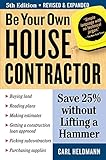

It's always good to learn about what you're getting into, even if you decide to go ahead and hire a general contractor for your job. By making yourself aware of all the issues involved you can make smarter decisions along the way and save yourself some money.
Even if you choose to work through a professional building contractor rather than acting as your own general contractor, understanding the issues and responsibilities of a GC will be useful in dealing with problems as they arise and, most importantly, accurately and thoroughly laying out the technical specifications and the complete meanings of those specifications.
More Log Cabin Building Pages:
Cabin Roofing Choices Your log cabin roofing choices will affect your budget and long-term enjoyment of your cabin.
Log Home Building School Learn practical ways to craft your dream at a log home building school.
Build a Log Cabin To build a log cabin means coordinating many aspects and prompt decision-making.
Cheap Hardwood Flooring Cheap hardwood flooring is available through my supplier, shipped anywhere in the country.
Build a Small Log Cabin How To Build a Small Log Cabin: Reprinted from December 1983 Popular Mechanics by Michael Chotiner with illustrations done by Harry Schaare.
Leave a Reply