
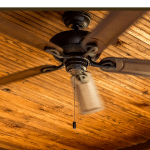
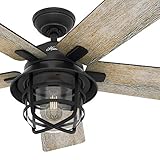
The right ceiling fans will improve the quality of life in your log home. They will keep you cool in the summer and allow you to run your air conditioning less by providing a light breeze that dispels the heat. In the wintertime, you can keep the fans running on low to help distribute the warm air in your cabin and keep everything feeling cozy.
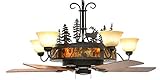
- Reversible motor allows you to change directions for summer and winter conditions
- UL Damp-rated for use in Outdoor and Indoor locations such as your covered porch or patio
- Included remote kit allows you to change fan speed and the brightness of the chandelier lights
- Lifetime Warranty for the motor, and 1 year warranty for all other components
- Each fan is artfully crafted in the USA in our New Mexico Facility
There are few things nicer than sitting in front of your cabin fireplace in the winter, with the warm air being gently circulated by an overhead fan.
Jump to:
Ceiling Fan Guidelines


When choosing overhead fans for your log home there are certain dimensions to keep in mind:
| Room Dimension: | Ceiling Fan Size: |
| 12’ or less | 36” |
| 12’ to 15’ | 42” |
| 15’ to 18’ | 52” |
| 18’ and above | multiple fans |
Using the above guide will provide adequate air flow throughout a given room without being too large or overbearing. If your room is on the borderline I would suggest going with the larger size cabin fan. Otherwise you may be running the smaller fan longer or at a higher speed to ensure proper airflow and the noise may be objectionable.

- 🦌【Rustic Chandelier Lighting Design Stems From】Slowly extending branch resin, like a deer antler, makes life closer to nature. Antler light fixture integrated into the home, implying a better life.
- 🦌【Dimension】Faux antler chandelier chain adjustable, suitable for high ceiling or low ceiling rooms. Fixture Height is about 19.5’’ , Fixture Width is about 23.5’’. (4 lights)
- 🦌【Suitable Place】Daytime is art decoration. Night is pendant light lighting, fit for cabin, lodge, dining room, farmhouse, living room, bedroom, clothing store, kitchen, hotel, lobby, hallway, entryway.
- 🦌【Horn Chandelier】Style: American Countryside, Rustic, Vintage, Industrial. Pendant lamp is made of resin and metal. Bulb Base: E12. Bulb Type: LED/Incandescent/Fluorescent (Bulb Not Included).
- 🦌【100% Satisfied】Warranty: 2 years. This unique pendant light was upgraded based on thousands of our valuable customers' requests. Package included: 1×candle antler chandelier, with accessories and instructions.
You also want to be careful about where you mount the overhead fans in relation to the ceiling height. If you mount the fan too close to the ceiling the fan will not move air properly since there isn’t enough room above it for the airflow. Likewise, it’s important to keep the ceiling fan high enough that there is no risk of someone hitting their head or accidentally swinging an arm into it. Here’s a rough guideline:
- From fan to floor, keep approximately 8’
- From fan to ceiling, keep approximately 18”
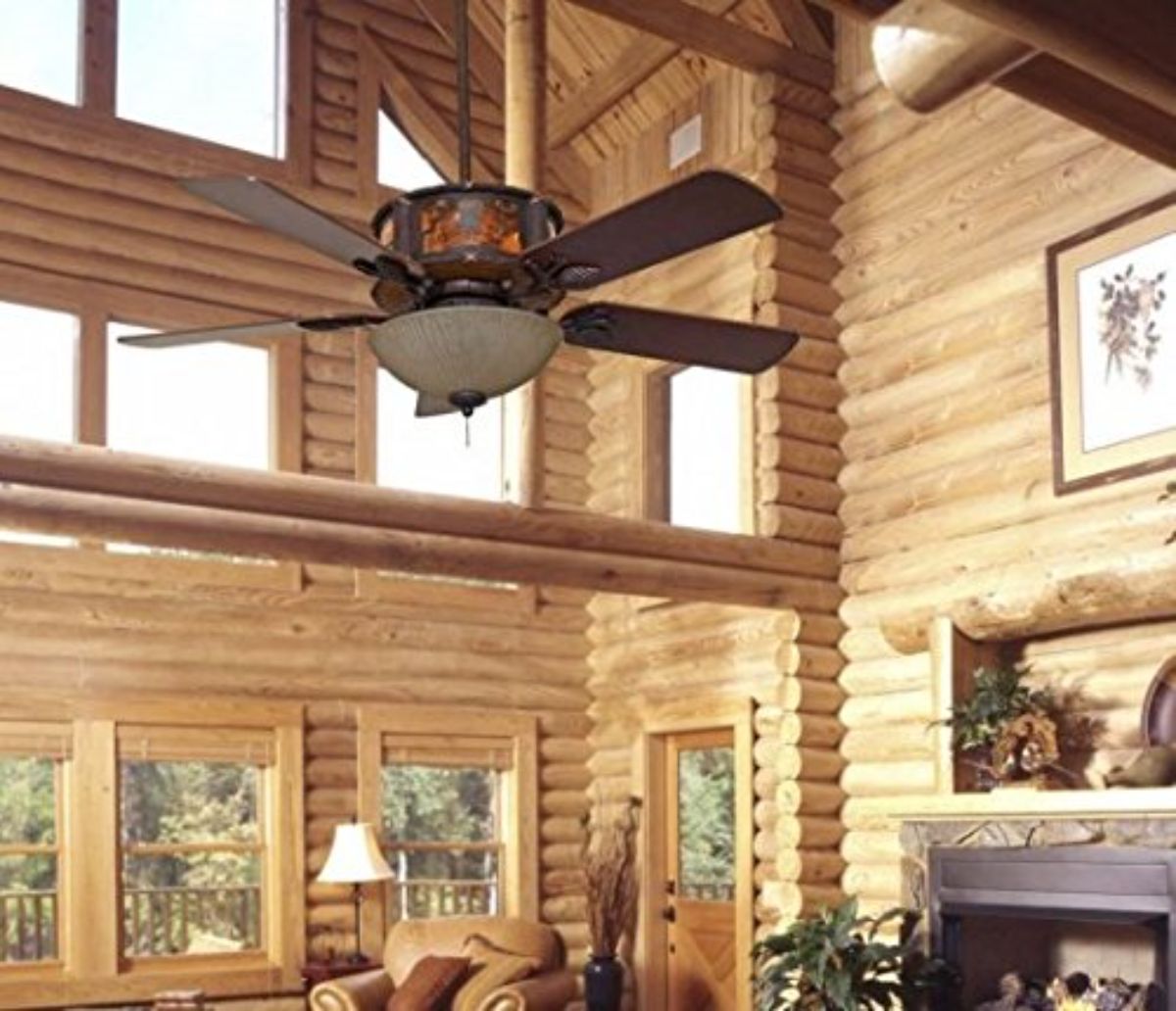
Of course, these are rough figures as ceiling heights can vary greatly. On high cathedral ceilings in a great room, we typically mount our fans on 48" down rods since these 4-foot rods are the longest ones that are easily available. This leaves our fans about 8’ – 10’ off the floor.
Here are common lengths, available in black, rubbed bronze, and brushed nickel:
With multiple overhead fans in a large great room we’ll often run one fan blowing up in the winter and one fan blowing down to help circulate the heat and keep the overall room temperature even.
If you have a steeply pitched cabin roof you may need to build angled boxes for mounting the overhead fans, although some cabin fans can accommodate angled mounts.
Best Overhead Fans
What should you look for in a quality cabin fan? Nearly all fans commercially available at big box stores or home supply outlets will work just fine, but here are a few details to look out for:
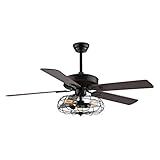
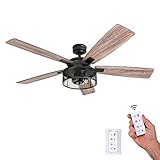
- CREATE THE IDEAL ATMOSPHERE: Our 5-blade ceiling fan light provides powerful air circulation and soft lighting. Its stylish look will immediately add character to your home. This modern fan flaunts warm rustic, dual-finish walnut / cherry blades, a matte black finish motor housing as well as 3 E26 edison light bulbs (not included).
- 3 SPEEDS DUAL-DIRECTION FAN: The powerful ceiling fan operates on 3 forward and reverse speeds (easy to adjust with the included handheld remote). Its quiet, reversible motor allows it to turn your room into an oasis in summer as well as warming you up during winter.
- REMOTE CONTROL: Light bulbs and fan can be controlled remotely via the remote control. The timer function can automatically turn off the motor and light bulb after you fall asleep.
- MADE FOR ANY SPACE: The 52-inch blade span makes this ceiling fan perfect for spaces like living rooms, bedrooms or larger bathrooms (suitable for damp places). 2 down rods (4.5” and 10” long) are included to match different ceiling heights.
- HIGH-QUALITY & SAFETY: This ceiling fan light kit meets ETL & DOE certifications and is specially designed for safe and energy-efficient usage. The durable ABS blades will last for many years to come without rack or sag.
- The best blades are made of wood and acrylic.
- Blades should be mounted at a 12 – 15 degree angle. More than this and they can be loud. Less than this and they won't push enough air.
- Motor should have heavy-duty windings and sealed, permanently-lubed bearings for long life and quiet operation.
- Fans should be reversible so you can direct airflow down in the summer and up in the winter to aid in circulation of heat.
Ceiling Fan Pull Chains
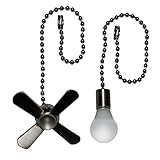
- Harbor Breeze fan light combo pull chain
- For indoor use only
If you're like me you can never tell which of the pull chains turns on the light and which one turns on the fan. Here's a simple way to distinguish them and you'll never have to try and explain to guests how to turn them on.
This cute ceiling fan pull chain set solves the problem of how to tell the difference between the light and the fan switch.
Cabin Fan Styles and Suppliers
Apart from these few technical details the only limitation on choosing overhead fans is your imagination. Cabin fans can have different themes to go along with your log home decorating, such as Adirondack, Western or Northwoods. You can go sleek and contemporary with gleaming stainless steel or go rustic with wrought iron and leather.
Some ceiling fan suppliers with cabin-style fans are:
The right ceiling fans will set off your log home décor interior and provide you with years of enjoyment. Check out our page about log home interior design for more information.
More Cabin Decorating Pages:
Log Cabin Home Decor Ideas Log Cabin Home Decor Ideas for your Log Home Dreams
Your Cabin Fireplace Guide A cabin fireplace brings warmth, ambiance and a general sense of comfort to your log home.
Cabin Hardware Cabin hardware adds practical performance to the overall rustic feel of a log home.
Log Cabin Decor Styles and Themes Using a log cabin decor style to guide your log home interior design ideas.
Creating the Log Cabin Look Creating the log cabin look can be as easy as installing log siding on an interior wall.
Leave a Reply